
Professional Agricultural Property Services in Western Washington
Agricultural Excavation & Property Services
Five-star-rated excavation, grading, land clearing, drainage, and property improvements for farms, horse properties, and rural acreage throughout Western Washington. From horse arenas and hoof-grid systems to pastures, fencing, barn pads, and gravel access, Pinpoint Construction builds practical improvements designed for demanding Northwest conditions.

★★★★★ 5-Star Rated
Licensed & Insured
Free Estimates
How Can We Help With Your Projects
Choose the service that best matches your project to learn more.


Agricultural Property Improvements Done Right From the Ground Up
Every agricultural property has different needs, and properly planned excavation, grading, drainage, and land improvements can make the property more functional, accessible, and easier to maintain. Whether you are improving a horse property, reclaiming an overgrown pasture, controlling mud, preparing for fencing, or developing areas for barns, arenas, and equipment access, the work must be built around how the property will actually be used.
At Pinpoint Construction, we understand that every agricultural project requires a different approach. Soil conditions, drainage, livestock traffic, terrain, access, existing vegetation, and your long-term plans all influence how the work should be completed. Before work begins, we evaluate the property, discuss your goals, and develop a practical plan designed for Western Washington conditions.
Our goal is not simply to move dirt or clear vegetation—it is to improve the functionality, drainage, appearance, and long-term usability of your property while providing a professional experience from start to finish.
Why Choose Professional Agricultural Property Improvements?
Agricultural properties must handle livestock, equipment, heavy use, and year-round Western Washington weather. Proper excavation, grading, drainage, and surface preparation can reduce mud, improve access, protect animals, and make the property easier to operate and maintain.
Unlike temporary surface repairs, professionally planned agricultural improvements address the underlying conditions causing problems. Poor drainage, weak soils, inadequate base material, uncontrolled vegetation, and improper grading can quickly turn paddocks, gates, feeding areas, roads, and barns into muddy or unusable spaces.
Agricultural property improvements are an excellent choice for landowners who want practical, long-term solutions designed around how their property is actually used. Every project can be tailored to livestock traffic, equipment access, drainage patterns, existing structures, and future plans.
Agricultural property services are commonly used for:
-
Horse arena construction and grading
-
Hoof-grid installation
-
Paddock and sacrifice-area improvements
-
Mud-control systems
-
Pasture reclamation
-
Field mowing and brush hogging
-
Fence-line clearing and preparation
-
Barn and outbuilding building pads
-
Farm roads and gravel access
-
Trailer and equipment parking areas
-
Agricultural drainage
-
Culvert installation
-
Property cleanup
-
Old structure and fence removal
Some projects only require targeted improvements, while others need complete clearing, excavation, drainage, and grading. If your property includes heavy vegetation, large stumps, poor access, or areas being prepared for new construction, our Land Clearing, Site Preparation and Grading, Drainage and Storm water, or Gravel Driveway services may also be part of the project.
We evaluate the existing conditions, discuss how the property needs to function, and help determine the most practical approach for your goals and budget.
Takeaway
Professional agricultural property improvements create safer, cleaner, better-drained, and more usable spaces for livestock, equipment, buildings, and everyday property operations.
Our Agricultural Property Services
Every agricultural property has different terrain, drainage conditions, access requirements, livestock needs, and long-term goals. Whether you are improving a horse property, reclaiming an overgrown pasture, constructing an arena, preparing for fencing, or developing areas for barns and equipment access, Pinpoint Construction provides professional agricultural property services tailored to the way your land will be used.
We take the time to understand your goals and evaluate the property’s soil, drainage, vegetation, terrain, access, and existing improvements before developing the right approach. Our agricultural services are available throughout Western Washington for horse owners, farmers, livestock operations, rural homeowners, and acreage owners looking for practical, long-lasting property improvements.
Horse-Property and Paddock Improvements
Create safer, cleaner, and more functional areas for horses and livestock by improving drainage, stabilizing high-traffic areas, and installing surfaces designed for year-round use.
Common horse-property improvements include:
-
Hoof-grid installation
-
Paddock construction
-
Sacrifice-area construction
-
Mud-control systems
-
Gate-area stabilization
-
Feeding-area stabilization
-
Livestock lanes and turnouts
-
Round-pen site preparation
-
Barnyard grading
-
Watering-area improvements
Horse-Arena Construction and Grading
Prepare indoor and outdoor horse arenas with proper excavation, drainage, grading, base installation, and surface preparation. A correctly constructed arena helps promote consistent footing, effective drainage, and dependable use throughout the year.
Horse-arena services commonly include:
-
Arena site clearing
-
Topsoil and unsuitable-soil removal
-
Cut-and-fill grading
-
Drainage installation
-
Compacted aggregate base installation
-
Arena footing preparation
-
Crown and slope correction
-
Arena resurfacing
-
Round-pen construction
-
Arena access improvements
Pasture Reclamation and Field Mowing
Restore overgrown fields and neglected pastures by removing brush, invasive vegetation, small trees, and accumulated growth. We can improve access, increase usable acreage, and prepare the ground for future pasture management.
Pasture and field services commonly include:
-
Field mowing
-
Brush hogging
-
Pasture reclamation
-
Overgrown-field clearing
-
Blackberry removal
-
Scotch broom removal
-
Brush and sapling removal
-
Forestry mulching
-
Stump and rock removal
-
Pasture expansion
-
Rough-field grading
Agricultural Fencing and Fence-Line Clearing
Prepare clean, accessible fence lines and install practical fencing systems for horses, livestock, pastures, and rural properties. Proper clearing and grading help create straighter fence lines, improve access, and make installation and future maintenance easier.
Agricultural fencing services may include:
-
Horse fencing
-
Livestock fencing
-
Field and perimeter fencing
-
Cross-fencing
-
Fence-line clearing
-
Fence-line grading
-
Post-hole drilling
-
Gate installation
-
Gate-entrance preparation
-
Old-fence removal
-
Overgrown fence-line restoration
Barn, Shop, and Outbuilding Site Preparation
Prepare stable, properly drained building sites for barns, shops, agricultural storage buildings, equipment shelters, and other rural structures.
Building site services commonly include:
-
Barn building pads
-
Shop building pads
-
Pole-building pads
-
Greenhouse site preparation
-
Foundation excavation
-
Site clearing
-
Topsoil stripping
-
Cut-and-fill grading
-
Structural fill placement
-
Back filling and compaction
-
Utility trenching
-
Final grading
Farm Roads, Gravel Lots, and Trailer Access
Build and improve dependable access for trucks, tractors, livestock trailers, farm equipment, and everyday property use. Proper excavation, base preparation, drainage, and compaction help prevent rutting, potholes, and seasonal access problems.
Agricultural access services commonly include:
-
Farm roads
-
Gravel driveways
-
Private roads
-
Equipment-access roads
-
Horse-trailer parking
-
Equipment parking areas
-
Gravel lots
-
Truck and trailer turnarounds
-
Road widening
-
Road resurfacing
-
Construction entrances
-
Culvert installation
-
Rock aprons
Agricultural Drainage and Mud Control
Manage surface water and wet ground around paddocks, barns, arenas, pastures, roads, and livestock areas. Proper drainage helps protect improvements, reduce mud, improve access, and create safer conditions for animals and equipment.
Agricultural drainage services commonly include:
-
Paddock drainage
-
Pasture drainage
-
Barnyard drainage
-
Arena drainage
-
French drains
-
Curtain drains
-
Interceptor drains
-
Drainage swales
-
Catch basins
-
Solid drainage pipe
-
Culvert installation
-
Rock-lined outlets
-
Wet-area stabilization
-
Erosion and sediment control
Agricultural Property Cleanup and Demolition
Remove unwanted structures, debris, brush, fencing, concrete, and accumulated materials to reclaim neglected areas and prepare the property for future use.
Property cleanup and demolition services commonly include:
-
Old barn and shed removal
-
Outbuilding demolition
-
Fence removal
-
Concrete and slab removal
-
Brush and stump removal
-
Debris hauling and disposal
-
Agricultural property cleanup
-
Scrap and material removal
-
Compost-pile relocation
-
Manure-area preparation
-
Site backfilling
-
Rough and final grading

Horse-Property and Paddock Improvements
Muddy paddocks, unstable gates, poor drainage, and heavily traveled livestock areas can make a horse property difficult to use and maintain. Whether you are constructing a new paddock, improving a sacrifice area, installing a hoof-grid system, or stabilizing areas around barns, feeders, and water troughs, proper site preparation creates safer and more dependable conditions.
At Pinpoint Construction, we provide professional horse-property and paddock improvements throughout Western Washington. We work with horse owners and rural property owners to improve drainage, stabilize weak ground, control mud, and create functional areas designed around livestock movement, equipment access, and year-round use.
Every horse property is different. Soil conditions, drainage, slopes, livestock traffic, available space, existing structures, and your long-term goals all influence how the project should be completed. Before work begins, we evaluate the property, discuss the problems you are experiencing, and develop a practical improvement plan tailored to the site.
Unlike repeatedly adding gravel over soft ground, properly constructed paddocks and high-traffic areas address the underlying conditions. This may include removing unsuitable soil, correcting drainage, installing geotextile, placing and compacting aggregate, and installing hoof-grid or another stabilized surface system. The result is a cleaner, firmer, and more manageable area that holds up better under regular livestock and equipment traffic.
Our horse-property and paddock services are commonly used for:
-
Hoof-grid installation
-
Paddock construction
-
Sacrifice-area construction
-
Mud-control improvements
-
Gate-area stabilization
-
Feeding-area stabilization
-
Watering-area stabilization
-
Barn and shelter entrances
-
Livestock lanes and turnouts
-
Round-pen site preparation
-
Horse-trailer areas
-
Barnyard grading and drainage
Many horse-property improvement projects continue with additional services such as agricultural drainage, horse-arena grading, pasture reclamation, fence-line clearing, barn-pad preparation, and gravel-road construction. By completing these services together, we help create a coordinated property improvement plan while reducing the need to manage multiple contractors.
Throughout every project, we focus on drainage, base preparation, safe access, material separation, and long-term usability. Our objective is to create horse and livestock areas that are cleaner, better drained, easier to maintain, and better suited for Western Washington’s wet conditions.
Takeaway
Professional paddock, hoof-grid, and mud-control improvements create firmer and more dependable areas for horses and livestock while reducing mud, rutting, and ongoing maintenance.
Common Project Example
A horse owner has a paddock that becomes heavily rutted and muddy during the wet season, especially around the gate, feeder, water trough, and shelter entrance. Repeatedly adding gravel has not solved the problem because the material continues mixing into the soft native soil.
We evaluate the drainage and existing grades, remove unsuitable surface material, redirect concentrated runoff, install geotextile and a compacted aggregate base, and place a hoof-grid system in the highest-traffic areas. The completed project provides firmer footing, improves access, reduces mud, and makes the paddock easier to maintain throughout the year.
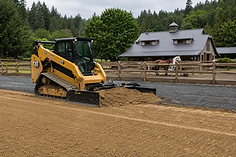
Horse-Arena Construction and Grading
A horse arena must provide consistent footing, reliable drainage, and a stable base that holds up under repeated use. Poor excavation, improper slopes, weak base material, and uncontrolled water can create soft spots, standing water, uneven footing, and ongoing maintenance problems.
At Pinpoint Construction, we provide professional horse-arena excavation, grading, drainage, and base preparation throughout Western Washington. We help property owners prepare new indoor and outdoor arenas, improve existing riding surfaces, and correct drainage or grading problems that affect arena performance.
Every arena project is different. Native soil, groundwater, slope, drainage, arena dimensions, riding discipline, expected use, equipment access, and the selected footing material all influence how the arena should be constructed. Before work begins, we evaluate the site, discuss the intended use, and develop a preparation plan based on the property’s conditions and project requirements.
A dependable arena begins below the riding surface. Construction may require clearing and stripping, cut-and-fill grading, drainage installation, geotextile separation, structural aggregate placement, compaction, and precision final grading. The selected riding footing is then placed over the prepared base according to the owner’s, trainer’s, or arena designer’s specifications.
Our horse-arena services are commonly used for:
-
Outdoor riding arenas
-
Indoor arena building sites
-
Covered arenas
-
Round pens
-
Training areas
-
Warm-up areas
-
Private horse properties
-
Boarding facilities
-
Arena expansions
-
Arena drainage corrections
-
Arena base repairs
-
Arena resurfacing and regrading
Many horse-arena projects continue with additional services such as paddock construction, hoof-grid installation, barn-pad preparation, agricultural drainage, fencing preparation, trailer parking, and gravel-access construction. Completing these improvements together helps coordinate drainage, access, elevations, and long-term property use.
Throughout every arena project, we focus on proper water management, stable base construction, accurate grading, and clean transitions around gates and surrounding areas. Our objective is to prepare an arena that drains effectively, provides a consistent foundation for the selected footing, and is easier to maintain over time.
Arena Site Preparation
Arena site preparation may include:
-
Vegetation and topsoil removal
-
Unsuitable-soil excavation
-
Cut-and-fill grading
-
Subgrade shaping
-
Geotextile installation
-
Structural fill placement
-
Aggregate base installation
-
Compaction
-
Perimeter drainage
-
Final elevation control
Arena Drainage
Arena drainage must account for both surface runoff and subsurface water. Depending on the property, drainage improvements may include:
-
Perimeter interceptor drains
-
French or curtain drains
-
Surface swales
-
Solid outlet pipe
-
Catch basins
-
Culvert installation
-
Rock-lined outlets
-
Downhill erosion protection
-
Drainage around gates and access areas
Water must be directed away from the arena without creating new drainage problems elsewhere on the property.
Existing Arena Regrading and Repair
Existing arenas can develop low areas, uneven footing, drainage problems, and base contamination over time. Depending on the condition of the arena, improvements may include removing contaminated footing, repairing the base, correcting slopes, restoring drainage, and reinstalling or replacing the riding surface.
Takeaway
Professional horse-arena construction and grading provide the stable base, controlled drainage, and accurate elevations needed for consistent footing and dependable year-round use.
Common Project Example
A property owner wants to construct an outdoor riding arena on a gently sloping section of their horse property. The area contains soft topsoil and receives runoff from the uphill pasture.
We clear and strip the arena footprint, balance the required cut and fill, install an uphill interceptor drain, prepare and compact the subgrade, place the required aggregate base, and grade the finished surface to the specified elevations. The owner’s selected arena footing is then installed over the completed base. The finished arena has controlled drainage, consistent support, and clean access from the barn and paddocks.

Pasture Reclamation and Field Mowing
Overgrown fields and neglected pastures can quickly lose usable acreage to blackberries, Scotch broom, brush, saplings, fallen material, and years of unmanaged growth. Pasture reclamation clears unwanted vegetation, restores access, and prepares the land for future mowing, fencing, grazing, drainage, or other agricultural improvements.
Pinpoint Construction provides professional pasture reclamation, field mowing, brush hogging, and vegetation-management services throughout Western Washington. We work with horse-property owners, farmers, livestock operations, rural homeowners, and acreage owners to reclaim overgrown ground while preserving desirable trees, established access routes, and useful property features whenever practical.
Every property requires a different approach. Vegetation density, hidden debris, rocks, stumps, slopes, wet ground, fencing, access, and the owner’s long-term plans all affect how the field should be cleared. Before work begins, we inspect the property, discuss the intended use, and determine the most practical clearing method.
Our Pasture Reclamation and Field Services
Pasture and field services may include:
-
Field mowing
-
Brush hogging
-
Pasture reclamation
-
Overgrown-field clearing
-
Blackberry removal
-
Scotch broom removal
-
Brush and sapling removal
-
Forestry mulching
-
Stump removal
-
Surface-rock removal
-
Pasture expansion
-
Fence-line clearing
-
Trail and access clearing
-
Rough-field grading
-
Vegetation maintenance
Field Mowing and Brush Hogging
Field mowing and brush hogging are practical options for maintaining established fields with grass, weeds, and manageable brush. Regular mowing helps control unwanted growth, maintain access, and prevent open areas from becoming heavily overgrown.
Before mowing begins, the field should be checked for hazards such as:
-
Wire and abandoned fencing
-
Large rocks
-
Hidden stumps
-
Scrap metal
-
Deep holes
-
Drainage ditches
-
Irrigation components
-
Wet or unstable ground
-
Other concealed debris
Fields with heavy brush, dense saplings, large stumps, or extensive blackberry growth may require Forestry Mulching or Land Clearing before routine mowing is practical.
Overgrown-Pasture Reclamation
Pasture reclamation is intended for fields that have progressed beyond ordinary mowing. These properties may contain woody brush, small trees, blackberries, Scotch broom, fallen limbs, stumps, and other obstacles.
The reclamation process may include:
-
Clearing access to the field
-
Removing abandoned fencing and debris
-
Cutting or mulching brush
-
Removing unwanted saplings
-
Grinding or extracting stumps
-
Removing surface rocks
-
Opening drainage routes
-
Rough grading disturbed areas
-
Preparing the field for future maintenance
Reclamation does not automatically create a finished grazing pasture. Soil preparation, amendments, seeding, weed management, and pasture-establishment work may still be required after the land is cleared.
Blackberry and Scotch Broom Removal
Blackberries and Scotch broom spread aggressively and can take over fence lines, field edges, access roads, and unused acreage. Mechanical removal can reclaim the affected area, improve visibility, and make continued vegetation management easier.
The appropriate method depends on plant density, terrain, nearby trees, fencing, and the desired finished condition. Follow-up mowing or vegetation management is usually necessary because invasive plants may regrow from roots or remaining seed.
Forestry Mulching for Pasture Reclamation
Forestry mulching is useful where fields contain dense brush, woody vegetation, saplings, and invasive growth that cannot be handled effectively with ordinary mowing.
The vegetation is processed into mulch and left across the ground, reducing the amount of material that must be piled or hauled away. Forestry mulching can also minimize soil disturbance compared with complete clearing.
If the future use requires stump removal, excavation, deep grading, or a completely clean building area, traditional Land Clearing may be the better option.
Stump, Rock, and Debris Removal
Old fields frequently contain hidden stumps, rocks, wire, discarded materials, and remnants of previous improvements. These obstacles can damage mowing equipment, interfere with fencing, and make the property unsafe for animals.
Stump, rock, and debris removal can be included when access and ground conditions allow. Larger excavation and grading services are available throughout Kitsap, Jefferson, Mason, and Clallam counties.
Pasture Expansion
Existing pastures can sometimes be expanded into overgrown field edges or adjacent brush-covered acreage. Expansion may require selective clearing, forestry mulching, stump removal, fence-line preparation, drainage improvements, and rough grading.
Desirable mature trees, natural buffers, drainage features, and property boundaries should be identified before clearing begins.
Rough-Field Grading and Drainage
After clearing, some areas may need rough grading to smooth disturbed ground, fill stump holes, restore access, or improve surface-water movement. Wet fields may also require drainage improvements before they can support regular livestock or equipment use.
Excavation-based pasture grading and Agricultural Drainage services are available in Kitsap, Jefferson, Mason, and Clallam counties.
Ongoing Vegetation Management
Pasture reclamation is not a one-time cure for every vegetation problem. Blackberry, Scotch broom, brush, and saplings can return if the property is not maintained.
A practical long-term plan may include:
-
Scheduled field mowing
-
Follow-up brush cutting
-
Fence-line maintenance
-
Selective forestry mulching
-
Invasive-growth monitoring
-
Drainage maintenance
-
Continued pasture management
Consistent maintenance is generally easier and less expensive than allowing the property to become completely overgrown again.
Coordinating Related Agricultural Improvements
Pasture reclamation and field mowing are commonly completed with:
-
Agricultural Fencing and Fence-Line Clearing
-
Horse-property and paddock improvements
-
Forestry Mulching
-
Land Clearing
-
Blackberry Removal
-
Scotch Broom Removal
-
Farm-road and access improvements
-
Agricultural Drainage and Mud Control
-
Property Cleanup
-
Barn and outbuilding site preparation
Coordinating clearing, access, drainage, and fencing helps prepare the property for its intended long-term use.
Takeaway
Professional pasture reclamation removes unwanted vegetation, restores access, and recovers usable acreage. Choosing the correct combination of mowing, brush hogging, forestry mulching, clearing, and grading creates a property that is easier to maintain and better prepared for future agricultural use.
Common Project Example
A horse-property owner has several acres of former pasture that have become overgrown with blackberries, Scotch broom, brush, and small trees. Old wire fencing and hidden stumps make ordinary mowing unsafe, and access to the back portion of the property has been lost.
We clear an access route, remove abandoned fencing and debris, mulch the dense vegetation, remove selected stumps and surface hazards, open the existing fence lines, and rough grade disturbed areas. The reclaimed acreage is then ready for continued mowing, new fencing, drainage improvements, and future pasture establishment.
Pasture Reclamation and Field Mowing Frequently Asked Questions
What is the difference between field mowing and pasture reclamation?
Field mowing maintains established grass and manageable vegetation. Pasture reclamation is a more involved process for land covered with heavy brush, invasive plants, saplings, stumps, rocks, or debris.
What is brush hogging?
Brush hogging is heavy-duty mowing used to cut tall grass, weeds, and light brush in fields and other open areas. It is not suitable for every size of tree, stump, rock, or woody growth.
Can you remove blackberries and Scotch broom?
Yes. We provide mechanical blackberry and Scotch broom removal through mowing, brush clearing, or forestry mulching, depending on the vegetation and site conditions.
Will invasive vegetation grow back?
It can. Blackberries, Scotch broom, and other invasive plants may regrow from roots, remaining plants, or seed. Follow-up mowing and continued vegetation management are usually necessary.
Can you turn wooded land into pasture?
Some wooded or brush-covered areas can be cleared for future pasture use, but this may require tree and stump removal, grading, drainage, soil preparation, and permitting. The site must be evaluated before the scope can be determined.
Do you remove rocks and stumps from fields?
Yes. Surface-rock and stump removal can be included where necessary and practical. The extent of removal depends on their size, quantity, access, and the intended future use.
Can you mow a field with hidden debris?
The field must first be inspected and accessible hazards identified. Wire, metal, large rocks, deep holes, and hidden materials can make mowing unsafe and may need to be removed before work proceeds.
Does pasture reclamation include seeding?
Clearing and ground preparation do not automatically include seeding or full pasture establishment. Seeding, soil amendments, and related work must be specifically included in the project scope.
Can you clear fence lines at the same time?
Yes. Fence-Line Clearing, old-fence removal, gate preparation, and access improvements can be coordinated with pasture reclamation.
How often should reclaimed fields be mowed?
The schedule depends on vegetation type, growth rate, weather, field conditions, and the owner’s goals. Regular maintenance helps prevent brush and invasive vegetation from taking over again.

Agricultural Fencing and Fence-Line Clearing
Reliable agricultural fencing starts with a clean, accessible, and properly prepared fence line. Dense vegetation, stumps, uneven terrain, poor drainage, and abandoned fencing can make installation difficult and create long-term maintenance problems.
Pinpoint Construction provides agricultural fencing and fence-line preparation for horse properties, livestock areas, pastures, acreage, and rural properties throughout Kitsap, Jefferson, Mason, and Clallam counties. Whether you need a new perimeter fence, cross-fencing, improved pasture access, or restoration of an overgrown fence line, we can prepare the area and build a practical system around how the property will be used.
Every fencing project is different. Livestock type, terrain, soil conditions, property boundaries, gates, vehicle access, drainage, existing vegetation, and future plans all influence the layout and preparation required. Before work begins, we evaluate the site, discuss your goals, and determine the clearing, grading, access, and installation work needed.
Our Agricultural Fencing Services
Agricultural fencing services may include:
-
Horse fencing
-
Livestock fencing
-
Field and perimeter fencing
-
Pasture cross-fencing
-
Paddock fencing
-
Fence-line clearing
-
Fence-line grading
-
Post-hole drilling
-
Gate installation
-
Gate-entrance preparation
-
Old-fence removal
-
Overgrown fence-line restoration
-
Brush and invasive-vegetation removal
-
Access preparation for future fence installation
Fence-Line Clearing
Blackberries, Scotch broom, brush, small trees, fallen limbs, and other vegetation can block existing fence lines or prevent new fencing from being installed efficiently. We clear the working corridor while preserving desirable trees and surrounding vegetation whenever practical.
Fence-line clearing may involve Forestry Mulching, Brush Clearing, selective tree removal, stump removal, or debris hauling, depending on the condition of the property and the intended fence layout.
Fence-Line Grading and Preparation
Uneven ground can create excessive gaps, inconsistent fence heights, difficult post placement, and poor access for installation and maintenance. Where needed, we grade the fence corridor, remove surface obstructions, stabilize soft areas, and prepare gate entrances.
Proper grading is especially important around paddocks, livestock lanes, driveways, gates, and other high-traffic areas where mud and standing water can quickly become a problem.
Post-Hole Drilling and Fence Installation
Once the fence line is prepared, post locations can be laid out according to the planned fence system. Post-hole drilling and installation requirements depend on soil conditions, slopes, fence design, livestock needs, and the presence of underground utilities.
Fence materials and spacing should be selected for the animals being contained and the way the property operates. Horse fencing, livestock fencing, perimeter fencing, and cross-fencing each have different requirements.
Gates and Livestock Access
Gate placement affects daily chores, trailer movement, pasture rotation, equipment access, and emergency entry. We can prepare and grade gate entrances, install suitable base material, and create wider access points for tractors, trucks, and livestock trailers.
Gate areas may also benefit from Hoof-Grid Installation, Gravel Access improvements, or Agricultural Drainage and Mud Control to prevent deep mud and surface failure.
Replacing Old or Overgrown Fencing
Old fencing can become buried in vegetation, damaged by falling trees, or made unsafe by broken posts and loose wire. We can remove unwanted fencing, clear the original corridor, reshape the area where necessary, and prepare it for a replacement fence.
Materials are handled and removed based on the project scope, site access, and disposal requirements.
Coordinating Fencing With Other Property Improvements
Agricultural fencing projects are often completed alongside:
-
Pasture reclamation
-
Horse-property and paddock improvements
-
Hoof-grid installation
-
Field mowing and brush hogging
-
Farm-road construction
-
Gravel parking and trailer-access areas
-
Barn and outbuilding site preparation
-
Drainage improvements
-
Property cleanup
-
Forestry mulching
Coordinating related work helps prevent new fencing from being disturbed by later clearing, excavation, drainage, or grading.
Takeaway
Professional fence-line clearing and preparation create straighter, more accessible, and easier-to-maintain agricultural fencing. Proper grading, gate preparation, drainage, and vegetation removal help the finished fence function better for livestock, equipment, and everyday property use.
Common Project Example
A horse-property owner needs to replace an overgrown perimeter fence and add cross-fencing between pastures. The existing corridor is blocked by blackberries, brush, damaged wire, and several small stumps. The gate areas also become muddy during the winter.
We remove the abandoned fencing, clear and grade the fence lines, prepare the post locations, improve the main gate entrance with a stable aggregate base, and install the new fencing system. The completed project provides safer containment, improved pasture management, and dependable access throughout the year.
Agricultural Fencing Frequently Asked Questions
Do you clear fence lines before installing fencing?
Yes. Fence-line clearing can include brush, blackberries, Scotch broom, small trees, stumps, abandoned fencing, and other obstructions that interfere with installation or future maintenance.
Can you restore an existing overgrown fence line?
Yes. We can uncover the existing corridor, remove unwanted vegetation and damaged materials, grade the area where needed, and prepare it for repairs or replacement fencing.
Do you install horse and livestock fencing?
Yes. We can prepare and install practical agricultural fencing for horses, livestock, paddocks, pastures, property boundaries, and cross-fenced areas based on the project requirements.
Can you drill the post holes?
Yes. Post-hole drilling can be included after the fence layout and underground utility locations have been confirmed. Rock, roots, slopes, and soil conditions may affect the installation method.
Can you prepare muddy gate entrances?
Yes. Gate areas can be excavated, graded, drained, and stabilized with aggregate or a hoof-grid system to create more dependable access.
Can you remove an old fence?
Yes. Old posts, wire, gates, and related materials can be removed and hauled away as part of the project scope.
Can you clear a fence line without removing mature trees?
In many cases, yes. We use selective clearing methods whenever practical to preserve desirable trees and natural features outside the required working corridor.
Should drainage and grading be completed before the fence is installed?
Yes, whenever those improvements will affect the fence corridor or gate areas. Completing earthwork first reduces the risk of damaging or relocating newly installed fencing.

Barn, Shop, and Outbuilding Site Preparation
A barn, shop, equipment shelter, greenhouse, or agricultural storage building is only as dependable as the site beneath it. Proper clearing, excavation, drainage, grading, structural fill, and compaction create the stable building area needed to support construction and reduce future settlement, mud, and water problems.
Pinpoint Construction provides professional outbuilding site preparation throughout Kitsap, Jefferson, Mason, and Clallam counties. We work with property owners, builders, and contractors to prepare sites for agricultural and residential accessory structures according to project plans and property conditions.
Every building site presents different challenges. Slopes, wet ground, unsuitable soil, vegetation, drainage, access, utility routes, and finished-floor elevations all affect how the site should be prepared. Before work begins, we review the proposed building location, construction plans, access requirements, and surrounding drainage conditions.
Our Outbuilding Site-Preparation Services
Building-site services may include:
-
Barn building pads
-
Shop building pads
-
Pole-building pads
-
Equipment-shelter pads
-
Agricultural storage-building pads
-
Greenhouse site preparation
-
Site clearing
-
Tree and stump removal
-
Topsoil stripping
-
Cut-and-fill grading
-
Foundation excavation
-
Structural fill placement
-
Backfilling and compaction
-
Utility trenching
-
Drainage installation
-
Gravel access construction
-
Rough and final grading
Site Clearing and Access
Brush, trees, stumps, debris, old structures, and unsuitable surface material may need to be removed before the building area can be prepared. We can also establish a Construction Entrance or improve an existing Farm Road so excavation equipment, concrete trucks, material deliveries, and other contractors can reach the site.
Access is evaluated early because narrow roads, weak surfaces, tight turns, slopes, and wet areas can affect the construction schedule and delivery process.
Topsoil Stripping and Building-Pad Grading
Organic topsoil is not suitable for supporting most structures. We remove topsoil and other unsuitable material from the building footprint before establishing the required subgrade.
The site is then cut, filled, and graded to create the building pad and surrounding working area. Proper grading also helps direct surface water away from the future structure instead of allowing it to collect around the foundation.
Structural Fill and Compaction
Where additional elevation or support is required, approved structural fill or aggregate is placed and compacted in controlled layers. Proper Backfilling and Compaction help create a firm, consistent base beneath foundations, slabs, approaches, and other load-bearing areas.
Fill depth, material requirements, and compaction specifications depend on the construction plans and site conditions.
Foundation Excavation
Foundation excavation is completed according to the approved plans and required dimensions. Depending on the building design, this may include excavation for continuous footings, foundation walls, thickened slab edges, individual piers, or pole-building posts.
Accurate excavation helps the foundation and concrete contractors complete their work efficiently while reducing unnecessary over-excavation and material use.
Drainage and Water Management
Western Washington building sites must be prepared for frequent rainfall and seasonal saturation. Depending on the property, drainage work may include:
-
Perimeter drainage preparation
-
Curtain or interceptor drains
-
Drainage swales
-
Culverts
-
Solid drainpipe
-
Rock-lined outlets
-
Roof-water discharge preparation
-
Wet-area stabilization
-
Erosion and sediment control
Drainage should be considered before the pad and access surfaces are completed so water can be managed without disturbing finished work later.
Utility Coordination and Trenching
Utility routes should be planned before final grading and surfacing. We can prepare trenches, crossings, and sleeves for electrical service, water lines, communications, drainage, and other planned utilities within the project scope.
Final connections and regulated utility work are completed by the appropriate utility provider or licensed trade when required.
Building Approaches and Equipment Access
Barns, shops, and agricultural buildings often need durable approaches for trucks, trailers, tractors, and equipment. We can prepare gravel driveways, aprons, parking areas, turnarounds, and entrances that provide dependable year-round access.
Proper base preparation, drainage, aggregate placement, and compaction help reduce rutting, potholes, and soft areas.
Final Grading and Site Readiness
After the primary excavation and underground work are complete, the surrounding site is graded to establish positive drainage and practical access around the building.
The site is left ready for the next construction phase based on the agreed scope. Final restoration may be completed after foundation, utility, and building work is finished.
Coordinating Related Agricultural Improvements
Barn and outbuilding site preparation is often completed with:
-
Agricultural Fencing and Fence-Line Clearing
-
Horse-property and paddock improvements
-
Horse-arena construction
-
Farm roads and gravel lots
-
Trailer parking and turnarounds
-
Agricultural drainage
-
Hoof-grid and mud-control systems
-
Land Clearing
-
Utility Trenching
-
Gravel Driveway construction
Coordinating these improvements helps create a property that works as one complete system rather than a collection of disconnected projects.
Takeaway
Professional barn, shop, and outbuilding site preparation creates stable building pads, dependable access, effective drainage, and properly coordinated utility routes. Completing the groundwork correctly gives the structure a reliable starting point and helps the rest of construction move efficiently.
Common Project Example
A property owner plans to build a detached pole barn for equipment storage. The selected location is covered with brush, slopes toward the building area, and becomes soft during wet weather. The project also requires truck access, electrical service, and space for trailers to turn around.
We clear the building area, strip unsuitable topsoil, establish a stable pad with compacted fill, prepare drainage around the site, excavate the required foundation or post locations, construct a gravel approach, and prepare the utility route. The finished site is organized, accessible, and ready for the building contractor.
Barn, Shop, and Outbuilding Site Preparation Frequently Asked Questions
What types of buildings can you prepare sites for?
We prepare sites for barns, shops, pole buildings, equipment shelters, agricultural storage buildings, greenhouses, detached garages, and similar accessory structures.
Do you prepare the building pad before the plans are complete?
The final pad dimensions, elevations, foundation layout, and material requirements should be based on the approved building plans. Preliminary clearing and access work may sometimes be completed earlier if the project boundaries are clearly established.
Can you clear trees and stumps from the building area?
Yes. Land Clearing, brush removal, tree removal, stump removal, and debris hauling can be included as part of the site-preparation scope.
Do you provide foundation excavation?
Yes. We provide Foundation Excavation for barns, shops, garages, pole buildings, and other approved structures based on the project plans.
Can you bring in and compact structural fill?
Yes. We can place and compact approved fill and aggregate to establish the building pad, approaches, and surrounding working areas.
Can you install drainage around the building site?
Yes. Drainage may include swales, drainpipe, curtain drains, culverts, stabilized outlets, and other improvements appropriate for the property and approved plans.
Can you prepare utility trenches?
Yes. Utility Trenching can be coordinated with the site work for electrical service, water, communications, drainage, and other planned utilities.
Can you build the gravel access at the same time?
Yes. Farm roads, gravel driveways, construction entrances, parking areas, and trailer turnarounds can be included in the same project.
Who establishes the building elevation and foundation requirements?
The required elevations, dimensions, and foundation specifications should come from the approved construction plans, survey information, builder, engineer, or other appropriate project professional.

Farm Roads, Gravel Lots, and Trailer Access
Agricultural properties need dependable access for trucks, tractors, livestock trailers, deliveries, and everyday property operations. A poorly constructed road or parking area can quickly develop potholes, ruts, standing water, soft shoulders, and seasonal access problems.
Pinpoint Construction builds and improves farm roads, gravel lots, trailer-access routes, and equipment-parking areas throughout Kitsap, Jefferson, Mason, and Clallam counties. We prepare each project around the property’s soil conditions, drainage, slopes, traffic, equipment use, and long-term access needs.
A durable gravel surface requires more than spreading rock over the existing ground. Proper construction may involve clearing, excavation, removing unsuitable soil, installing stabilization fabric, building a compacted aggregate base, managing drainage, and shaping the finished surface to shed water.
Our Agricultural Access Services
Agricultural road and access services may include:
-
Farm roads
-
Gravel driveways
-
Private roads
-
Equipment-access roads
-
Barn and shop approaches
-
Horse-trailer parking
-
Equipment-parking areas
-
Gravel lots
-
Truck and trailer turnarounds
-
Road widening and extensions
-
Gravel-road replacement
-
Road repair and resurfacing
-
Construction entrances
-
Culvert installation
-
Rock aprons
-
Muddy access stabilization
-
Roadside drainage
-
Final grading and compaction
New Farm-Road Construction
New farm roads begin with evaluating the proposed route, grades, drainage, soil conditions, turns, overhead clearance, and planned traffic. Vegetation, topsoil, roots, stumps, and unsuitable material are removed as necessary before the road base is constructed.
The road is then shaped and built with appropriate aggregate placed and compacted in layers. Crowning, cross-slope, ditches, culverts, and outlets may be incorporated to move water away from the driving surface.
Gravel Lots and Equipment Parking
Gravel lots provide practical parking and staging areas for tractors, implements, work trucks, livestock trailers, recreational vehicles, and other equipment. The area must be large enough for the intended use and properly graded to prevent water from collecting beneath parked vehicles.
Depending on the site, construction may include:
-
Clearing and stripping
-
Excavation
-
Geotextile stabilization
-
Aggregate base installation
-
Surface-rock placement
-
Compaction
-
Perimeter drainage
-
Turnaround construction
-
Connection to existing roads
-
Final surface grading
Horse-Trailer Access and Turnarounds
Horse trailers and agricultural trucks require more room to maneuver than passenger vehicles. Tight corners, narrow gates, steep approaches, weak shoulders, and limited turnaround space can make routine property access difficult or unsafe.
We can widen entrances, improve turning areas, prepare stable trailer-parking surfaces, and construct turnarounds designed around the vehicles regularly using the property.
Road Widening and Extensions
Existing farm roads may be too narrow for modern trucks, trailers, equipment, or construction traffic. Road widening may require clearing vegetation, cutting back slopes, extending culverts, improving drainage, stabilizing shoulders, and rebuilding portions of the road base.
We can also extend existing roads to reach new barns, shops, pastures, equipment areas, or future building sites.
Gravel-Road Repair and Resurfacing
Not every damaged farm road needs complete replacement. Roads with a stable base may be restored by correcting drainage, filling potholes, repairing rutted areas, reshaping the crown, adding gravel, and recompacting the surface.
A road with widespread soft spots, deep contamination, or a failing base may require excavation and reconstruction instead of surface gravel alone. We evaluate the existing conditions and recommend the practical repair level.
Drainage and Culvert Installation
Water is one of the primary causes of gravel-road failure in Western Washington. Standing water softens the road base, while uncontrolled runoff washes away surface material and erodes shoulders.
Agricultural road drainage may include:
-
Road crowning
-
Cross-sloping
-
Drainage ditches
-
Culvert installation
-
Culvert replacement
-
Catch basins
-
Solid drainpipe
-
Cross-drains
-
Rock-lined outlets
-
Rock aprons
-
Shoulder stabilization
-
Erosion protection
Drainage should be corrected before resurfacing whenever water is contributing to the road damage.
Construction Entrances and Rock Aprons
Construction entrances and rock aprons provide stable access during barn construction, site development, land clearing, and other property improvements. A properly prepared entrance helps reduce mud tracking, protects the roadway edge, and provides a dependable transition from the public road to the property.
These entrances can remain as part of the permanent driveway or farm-road system when designed for the property’s long-term access plan.
Coordinating Related Agricultural Improvements
Farm-road and gravel-access projects are commonly completed with:
-
Barn, shop, and outbuilding site preparation
-
Agricultural Fencing and Fence-Line Clearing
-
Horse-property and paddock improvements
-
Agricultural Drainage and Mud Control
-
Culvert Installation
-
Land Clearing
-
Utility Trenching
-
Gravel Driveway construction
-
Building-pad preparation
-
Property cleanup
Coordinating access, drainage, utilities, and building-site work reduces repeated excavation and helps the property function as a complete system.
Takeaway
A properly built farm road or gravel lot provides dependable year-round access for livestock trailers, trucks, tractors, equipment, and deliveries. Correct excavation, drainage, base construction, aggregate placement, and compaction help prevent recurring potholes, rutting, mud, and surface failure.
Common Project Example
A horse-property owner has a narrow gravel driveway leading to a barn. Livestock trailers cannot turn around easily, and the parking area becomes muddy during winter. Runoff from the upper pasture also crosses the driveway and washes away gravel.
We widen the access where needed, correct the drainage, install a culvert and stabilized outlet, rebuild soft sections of the driveway, and construct a compacted gravel trailer-parking area with a practical turnaround. The completed project provides more reliable access and easier trailer movement throughout the year.
Farm Roads, Gravel Lots, and Trailer Access Frequently Asked Questions
Do you build new farm roads?
Yes. We provide clearing, excavation, drainage, base preparation, aggregate placement, grading, and compaction for new farm and equipment-access roads.
Can you repair an existing gravel road?
Yes. Depending on its condition, repairs may include pothole correction, rut repair, reshaping, drainage improvements, new gravel, and compaction.
Does adding gravel fix every road?
No. Adding gravel will not correct a weak base, poor drainage, buried topsoil, or heavily contaminated material. Those underlying problems may need to be repaired first.
Can you build parking for horse trailers and equipment?
Yes. We construct gravel parking areas, turnarounds, approaches, and access routes for horse trailers, tractors, farm equipment, and work vehicles.
Can you widen an existing driveway or private road?
Yes. Widening may include vegetation clearing, excavation, shoulder stabilization, drainage improvements, culvert extensions, base construction, and additional gravel.
Do you install culverts?
Yes. Culvert installation and replacement can be included where needed to carry water beneath roads, entrances, and access routes.
Can you improve a muddy barn or gate entrance?
Yes. We can excavate unsuitable material, improve drainage, install stabilization fabric where appropriate, place aggregate, and compact the area to create more dependable access.
Can you build a construction entrance before the barn or shop is started?
Yes. Establishing the entrance early provides access for excavation equipment, concrete trucks, building-material deliveries, and other contractors.
How often does a gravel road need maintenance?
Maintenance depends on traffic, drainage, material quality, slopes, weather exposure, and the original construction. Roads with effective drainage and a stable base generally require less frequent repair.

Agricultural Drainage and Mud Control
Mud and standing water can make paddocks, gates, feeding areas, barn entrances, arenas, roads, and livestock areas difficult to use. Persistent wet conditions can also damage gravel surfaces, restrict equipment access, increase maintenance, and create poor footing for animals.
Pinpoint Construction provides agricultural drainage and mud-control services throughout Kitsap, Jefferson, Mason, and Clallam counties. We develop practical solutions based on how water enters the property, where it collects, existing soil conditions, surrounding elevations, livestock traffic, and how each area needs to function.
Effective mud control requires more than placing gravel over wet ground. Long-term improvement usually starts with managing runoff, establishing proper grades, removing unsuitable material, stabilizing the subgrade, and installing drainage or a durable surface system where needed.
Our Agricultural Drainage and Mud-Control Services
Agricultural drainage services may include:
-
Paddock drainage
-
Pasture drainage
-
Barnyard drainage
-
Horse-arena drainage
-
Gate-area stabilization
-
Feeding-area stabilization
-
Sacrifice-area improvements
-
Hoof-grid installation
-
French drains
-
Curtain drains
-
Interceptor drains
-
Drainage swales
-
Catch basins
-
Solid drainage pipe
-
Culvert installation
-
Rock-lined outlets
-
Wet-area stabilization
-
Gravel-surface installation
-
Erosion and sediment control
-
Runoff redirection
Paddock and Sacrifice-Area Drainage
Paddocks and sacrifice areas receive concentrated hoof traffic, especially during Western Washington’s wet season. Without proper drainage and surface preparation, these areas can quickly become deeply rutted and saturated.
Depending on the property, improvements may include removing unsuitable material, establishing drainage, installing geotextile stabilization, placing a compacted aggregate base, installing a hoof-grid system, and finishing the area with an appropriate surface material.
The exact system depends on soil conditions, traffic, drainage outlets, maintenance expectations, and the intended use of the area.
Hoof-Grid and Mud-Control Systems
Hoof-grid systems can provide added surface stability in heavily used areas such as:
-
Gates
-
Feeding stations
-
Watering areas
-
Barn entrances
-
Paddocks
-
Sacrifice areas
-
Livestock lanes
-
Trailer-loading areas
A hoof grid must be installed over a properly prepared and compacted base. Placing a grid directly over deep mud or unstable soil will not correct the underlying drainage and support problems.
Barnyard and Building Drainage
Roof runoff, uphill groundwater, compacted soils, and poor grading can cause water to collect around barns, shops, sheds, and livestock shelters. Drainage improvements can help direct water away from building foundations, entrances, stalls, and surrounding work areas.
Barnyard drainage may involve gutters and downspout discharge routes, solid drainage pipe, catch basins, swales, curtain drains, stabilized outlets, and grading around the structure.
Arena Drainage
Horse arenas require controlled drainage and consistent grading to protect the base and footing. Water that becomes trapped in the arena can create soft spots, uneven footing, surface contamination, and extended downtime after heavy rain.
Arena drainage may include subgrade shaping, perimeter drainage, interceptor drains, base installation, surface grading, and runoff management around the outside of the arena.
Drainage and grading should be designed around the arena location, soil conditions, footing system, surrounding slopes, and intended use.
French Drains, Curtain Drains, and Interceptor Drains
Subsurface drains may be used to collect and redirect groundwater or shallow runoff before it reaches a paddock, barn, arena, road, or other improvement.
These systems generally include a properly graded trench, drainage aggregate, filter fabric, perforated pipe where appropriate, and a suitable discharge location. The correct drain type and placement depend on where the water originates and how it moves through the property.
Swales, Culverts, and Surface-Water Control
Not every drainage problem requires an underground system. Properly graded swales, ditches, culverts, berms, and rock-lined channels can often manage surface water more efficiently.
Surface-water improvements may be used to:
-
Redirect hillside runoff
-
Carry water beneath farm roads
-
Protect barn and arena pads
-
Prevent water from crossing gravel areas
-
Reduce erosion
-
Move runoff toward a stable outlet
-
Protect pasture entrances and fence lines
Wet-Area Stabilization
Areas with weak or saturated soils may require excavation and stabilization before gravel or other surface materials are placed. Simply covering mud with additional rock often allows the aggregate to mix into the soil and disappear over time.
Wet-area stabilization may include:
-
Removing unsuitable soil
-
Correcting drainage
-
Installing geotextile fabric
-
Placing stabilization rock
-
Building a compacted aggregate base
-
Installing hoof grid
-
Applying appropriate surface material
-
Grading the area for positive drainage
Rock-Lined Outlets and Erosion Protection
Drainage water must discharge without washing away soil or creating a new problem farther downhill. Rock aprons, lined channels, level spreaders, and other stabilization methods may be used to slow water and protect outlet areas from erosion.
Discharge locations and erosion-control requirements depend on the site, drainage volume, property boundaries, and applicable project requirements.
Coordinating Related Agricultural Improvements
Agricultural drainage and mud-control projects are commonly completed with:
-
Horse-property and paddock improvements
-
Hoof-Grid Installation
-
Horse-Arena Construction and Grading
-
Barn, Shop, and Outbuilding Site Preparation
-
Farm Roads and Gravel Lots
-
Agricultural Fencing and Fence-Line Clearing
-
Culvert Installation
-
Gravel Driveway construction
-
Site Preparation and Grading
-
Erosion and Sediment Control
Coordinating drainage with excavation, grading, fencing, access, and surface installation helps prevent completed areas from being disturbed later.
Takeaway
Effective agricultural mud control begins by addressing water movement, weak soil, grading, and concentrated traffic. Proper drainage and base preparation create cleaner, safer, and more dependable areas for livestock, equipment, buildings, and daily property operations.
Common Project Example
A horse property has deep mud around the paddock gate, feeding area, and barn entrance. Roof runoff drains toward the paddock, and the existing gravel has mixed into the soft soil.
We identify the sources of water, redirect the roof runoff, install drainage where needed, remove unstable material, establish a compacted aggregate base, and install a hoof-grid system in the highest-traffic areas. The finished project provides better drainage, firmer footing, and easier access during wet weather.
Agricultural Drainage and Mud Control Frequently Asked Questions
Why does gravel keep disappearing into the mud?
Gravel often sinks when it is placed over soft, saturated, or organic soil without proper separation and base preparation. Drainage, excavation, geotextile stabilization, and correctly placed aggregate may be needed before adding the finished surface.
Can you completely eliminate mud from a horse property?
Drainage and surface improvements can significantly reduce mud, but results depend on the soil, rainfall, topography, livestock density, maintenance, and available discharge locations. The goal is to create practical, better-drained high-use areas.
What areas benefit most from mud-control improvements?
Gates, feeding stations, watering areas, barn entrances, sacrifice areas, livestock lanes, trailer-loading areas, and other concentrated traffic zones usually provide the greatest benefit.
Do hoof grids work in deep mud?
Not without proper preparation. The unstable material must be addressed, and the grid must be installed over an appropriate drainage and aggregate base.
What is the difference between a French drain and a curtain drain?
Both are subsurface drainage systems. A curtain or interceptor drain is generally positioned to intercept water before it reaches a problem area, while “French drain” is a broader term commonly used for aggregate-filled drainage trenches.
Can you improve drainage around an existing barn?
Yes. Depending on the conditions, improvements may include grading, roof-water piping, catch basins, swales, curtain drains, solid pipe, and stabilized outlets.
Do you install culverts beneath farm roads?
Yes. We install and replace culverts where appropriate to carry drainage beneath roads, driveways, entrances, and livestock-access routes.
Should drainage be completed before installing fencing or gravel?
Usually, yes. Drainage and major grading should be completed before fencing, hoof grids, or finished gravel surfaces whenever the work affects the same area.
Where will the drainage water go?
Every drainage system needs an appropriate outlet. The discharge location depends on the property’s elevations, existing drainage patterns, boundaries, site constraints, and applicable requirements.

Agricultural Property Cleanup and Demolition
Old barns, collapsing sheds, abandoned fencing, concrete slabs, brush, stumps, scrap materials, and accumulated debris can take up valuable space and create safety and access problems. Professional cleanup and demolition can reclaim these areas and prepare them for new buildings, pastures, parking, equipment storage, or other property improvements.
Pinpoint Construction provides agricultural property cleanup and demolition throughout Kitsap, Jefferson, Mason, and Clallam counties. We work with farm owners, horse-property owners, rural landowners, builders, and contractors to remove unwanted structures and materials while leaving the site clean, graded, and ready for its next use.
Every cleanup project is different. Structure size, construction materials, access, utilities, hazardous-material concerns, surrounding buildings, vegetation, concrete, disposal requirements, and future plans all affect the work. Before demolition begins, we evaluate the site, identify the intended limits, and develop an organized approach for demolition, sorting, hauling, backfilling, and grading.
Our Agricultural Cleanup and Demolition Services
Services may include:
-
Old barn removal
-
Shed and outbuilding demolition
-
Equipment-shelter removal
-
Old-fence removal
-
Concrete and slab removal
-
Foundation removal
-
Brush and stump removal
-
Debris hauling and disposal
-
Agricultural property cleanup
-
Scrap and unwanted-material removal
-
Compost-pile relocation
-
Manure-area preparation
-
Site clearing
-
Excavation and backfilling
-
Rough grading
-
Final grading
-
Land clearing after demolition
Old Barn, Shed, and Outbuilding Removal
Unused or deteriorated agricultural structures can interfere with future property improvements and may become unsafe over time. We remove barns, sheds, shelters, and other approved outbuildings in a controlled sequence based on their condition, surrounding features, access, and disposal requirements.
Demolition may include removing:
-
Wood framing
-
Metal roofing and siding
-
Interior materials
-
Concrete slabs
-
Footings and foundations
-
Posts and piers
-
Associated fencing
-
Abandoned surface materials
Utilities must be properly disconnected and confirmed before demolition begins.
Concrete, Slab, and Foundation Removal
Old slabs, foundations, livestock pads, walkways, and equipment areas may need to be broken, removed, and hauled away before the property can be reused.
After concrete removal, the excavated area can be backfilled with suitable material, compacted as needed, and graded for pasture restoration, gravel installation, a future building pad, or another planned use.
Old-Fence and Material Removal
Abandoned wire, broken posts, gates, panels, feeders, lumber, roofing, and scrap materials can become buried in vegetation and create hazards for livestock, people, and equipment.
We can clear access, remove unwanted fencing and accumulated materials, sort debris as practical, and haul approved materials to an appropriate disposal or recycling facility.
Brush, Stump, and Vegetation Cleanup
Demolition sites are often surrounded by blackberries, brush, small trees, and stumps. These materials can be removed as part of a Complete Site Cleanup or managed through Land Clearing, Brush Clearing, or Forestry Mulching.
The appropriate method depends on the vegetation, terrain, intended land use, and whether the roots and stumps must be removed.
Debris Hauling and Disposal
Demolition and agricultural cleanup can produce mixed loads of wood, metal, concrete, fencing, soil, vegetation, and general debris. These materials may require separation and disposal at different facilities.
Hauling requirements depend on material type, volume, site access, disposal restrictions, and whether materials can be recycled or must be disposed of.
Hazardous or regulated materials are not placed into standard demolition debris. Required testing, removal, and documentation must be completed by qualified professionals before general demolition proceeds.
Compost-Pile and Manure-Area Improvements
Large compost piles and manure-storage areas can outgrow their original location or contribute to mud, runoff, and access problems. Depending on the project, we can relocate approved material, clear the area, reshape the site, improve equipment access, and prepare a stable working surface.
Drainage, base material, containment requirements, and the final layout should be considered before a new storage area is established.
Backfilling and Grading After Demolition
Removing a structure often leaves foundation excavations, post holes, low areas, and disturbed soil. These areas must be properly backfilled and graded before the site can be safely reused.
Post-demolition site work may include:
-
Removing unsuitable material
-
Importing approved fill
-
Backfilling foundation areas
-
Compacting fill in controlled layers
-
Establishing positive drainage
-
Rough grading
-
Spreading retained topsoil
-
Preparing pasture or lawn areas
-
Building a gravel pad
-
Preparing a future building site
Preparing the Property for Its Next Use
Cleanup and demolition are often the first phase of a larger improvement. Once unwanted structures and debris are removed, the site may be prepared for:
-
A new barn or shop
-
Pasture expansion
-
Paddock improvements
-
Equipment parking
-
Horse-trailer access
-
A gravel lot
-
New agricultural fencing
-
Drainage improvements
-
A replacement building pad
-
General property restoration
Planning the future use before demolition allows excavation, backfilling, drainage, and grading to be completed in the correct sequence.
Coordinating Related Agricultural Improvements
Agricultural cleanup and demolition projects are commonly completed with:
-
Land Clearing
-
Forestry Mulching
-
Agricultural Fencing and Fence-Line Clearing
-
Barn, Shop, and Outbuilding Site Preparation
-
Farm Roads and Gravel Lots
-
Agricultural Drainage and Mud Control
-
Foundation Removal
-
Debris Hauling and Disposal
-
Site Preparation and Grading
-
Gravel Driveway construction
Combining related services can reduce repeated mobilization and leave the property ready for the next planned improvement.
Takeaway
Professional agricultural cleanup and demolition remove unsafe or unwanted structures, debris, fencing, concrete, and vegetation while preparing the land for productive future use. Proper hauling, backfilling, drainage, and grading are what turn a cleared area into a functional part of the property again.
Common Project Example
A rural property has a deteriorated shed, an abandoned concrete livestock pad, damaged wire fencing, blackberries, and accumulated scrap materials. The owner wants to reclaim the area for equipment parking and a future barn.
We clear access to the work area, remove the structure and fencing, break and haul away the concrete, clear the brush and stumps, remove approved debris, backfill disturbed areas, and grade the site. We then prepare a compacted gravel area that can provide immediate equipment parking and future construction access.
Agricultural Property Cleanup and Demolition Frequently Asked Questions
What types of agricultural structures can you remove?
We remove approved barns, sheds, equipment shelters, small outbuildings, concrete pads, foundations, fencing, and similar agricultural improvements. The structure and site must be evaluated before the scope can be confirmed.
Do demolition projects require permits?
Permit requirements depend on the structure, property, utilities, and local jurisdiction. Required permits and approvals should be confirmed before demolition begins.
Must utilities be disconnected first?
Yes. Electrical, water, gas, septic, and other active services must be properly disconnected or made safe before demolition. The responsible utility provider or licensed trade may need to complete that work.
What happens if asbestos or another hazardous material is present?
Suspected hazardous or regulated materials may require testing and professional abatement before demolition. These materials cannot be handled as standard construction debris.
Can you remove concrete slabs and foundations?
Yes. Concrete slabs, footings, piers, and foundations can be broken, removed, hauled away, and backfilled as part of the project.
Do you haul away the debris?
Yes. Debris hauling and disposal can be included. Disposal costs depend on the types and quantities of materials being removed.
Can you remove old fencing and overgrown vegetation together?
Yes. Fence removal, blackberry clearing, brush removal, stump removal, and general cleanup can be combined into one coordinated project.
Can you prepare the area for a new building?
Yes. After demolition, we can provide Site Preparation, Building-Pad Preparation, Foundation Excavation, drainage, utility trenching, gravel access, and grading for the replacement structure.
Can you turn the cleared area into pasture?
Depending on the site, we can remove debris, backfill excavations, establish drainage, spread suitable soil, and rough or finish grade the area for future pasture restoration.
Can you relocate a compost or manure pile?
We can relocate approved material and prepare the surrounding area when site access, material condition, destination, and property requirements allow.

Why Choose Pinpoint Construction for Agricultural Property Improvements?
Agricultural properties require practical solutions built around real daily use. Livestock traffic, heavy equipment, wet weather, drainage, access, existing structures, and future plans must all be considered before work begins.
Pinpoint Construction provides coordinated agricultural excavation and property-improvement services throughout Kitsap, Jefferson, Mason, and Clallam counties. Instead of treating clearing, grading, drainage, fencing, roads, and building-site preparation as unrelated projects, we plan the work in the correct sequence to help avoid repeated excavation, unnecessary costs, and preventable delays.
Solutions Designed Around Your Property
No two farms, horse properties, or rural acreages operate exactly the same way. We evaluate how animals, vehicles, trailers, equipment, water, and people move through the property before recommending an approach.
The goal is to create improvements that support how the property is actually used—not apply the same standard solution to every site.
Multiple Services From One Contractor
Agricultural improvements often require several connected services. Pinpoint Construction can coordinate:
-
Land and brush clearing
-
Forestry mulching
-
Horse-property and paddock improvements
-
Hoof-grid installation
-
Horse-arena grading
-
Pasture reclamation
-
Agricultural fencing
-
Barn and shop site preparation
-
Farm roads and gravel lots
-
Trailer parking and turnarounds
-
Drainage and mud control
-
Culvert installation
-
Utility trenching
-
Property cleanup and demolition
-
Back filling and grading
Completing related work through one contractor can simplify scheduling, improve communication, and help each part of the property work together.
Built for Western Washington Conditions
Western Washington properties must handle extended rainfall, saturated soils, surface runoff, steep ground, dense vegetation, and seasonal mud. We account for these conditions when planning drainage, grading, access roads, paddocks, building pads, and other improvements.
A surface that looks good during summer may fail quickly if the underlying soil, base, and drainage are not properly addressed. We focus on correcting those underlying conditions whenever practical.
Clear Communication and Professional Planning
Before work begins, we discuss the project goals, review the site, identify the intended scope, and explain the recommended approach. If plans, permits, utility coordination, material selections, or outside trades are required, those responsibilities are identified as early as possible.
Throughout the project, we focus on maintaining an organized jobsite, protecting surrounding property, communicating clearly, and completing the agreed work efficiently.
Quality Work From the Ground Up
The parts of a project that are eventually covered are often the most important. Subgrade preparation, drainage, fill placement, compaction, and proper elevations determine how well the finished improvement performs.
We do not rely on temporary surface repairs when the real problem is underneath. Our work is focused on creating dependable results that improve the long-term usability and maintenance of the property.
Five-Star-Rated Service
Pinpoint Construction has built its reputation by providing dependable service, professional workmanship, and straightforward communication. We are five-star rated and committed to 100% customer satisfaction on every project.
Our goal is to leave each property cleaner, safer, more functional, and better prepared for the owner’s long-term plans.
Takeaway
Property owners choose Pinpoint Construction for coordinated agricultural improvements, practical planning, clear communication, and professional work designed for Western Washington conditions. From clearing and drainage to roads, paddocks, fencing, and building sites, we help create rural properties that function better year-round.

Our Agricultural Property Improvement Process
Every agricultural property functions differently. Livestock movement, equipment access, drainage, soil conditions, existing structures, fencing, and future plans must all be considered before work begins.
Our process is built around understanding how the property needs to operate and completing each phase in the correct order.
1. Property Evaluation and Goal Planning
We begin by walking the property and discussing the problems you want to correct and the improvements you want to make.
During the evaluation, we consider:
-
Current and future property use
-
Livestock type and traffic patterns
-
Barns, arenas, paddocks, and pastures
-
Roads, gates, and trailer access
-
Existing vegetation and fencing
-
Surface-water movement
-
Wet and muddy areas
-
Soil and terrain conditions
-
Existing and proposed utilities
-
Property boundaries and protected areas
-
Future buildings or improvements
This allows us to understand how each part of the property connects before recommending a solution.
2. Project Scope and Work Sequence
After evaluating the site, we develop a project scope based on the property owner’s priorities, budget, and long-term goals.
Agricultural projects often involve several related services. The work may need to be completed in a specific sequence, such as:
-
Clearing vegetation and debris
-
Removing unwanted structures or fencing
-
Establishing construction access
-
Correcting drainage
-
Completing excavation and grading
-
Installing utilities or culverts
-
Constructing pads, roads, or livestock areas
-
Installing fencing and gates
-
Completing final grading and cleanup
Planning the sequence helps prevent completed surfaces, fencing, drainage, and other improvements from being disturbed later.
3. Site Preparation and Access
Before major work begins, we prepare safe and practical access to the project area. This may involve clearing brush, removing stumps, improving an existing farm road, establishing a Construction Entrance, or preparing space for material deliveries.
Animals should be safely relocated from active work areas, and gates, temporary fencing, private utilities, septic components, wells, and other property features should be identified before construction begins.
4. Clearing, Demolition, and Removal
Unwanted vegetation, old fencing, deteriorated structures, concrete, debris, and other obstructions are removed as required by the project scope.
Depending on the property, this phase may include:
-
Land Clearing
-
Forestry Mulching
-
Brush and blackberry removal
-
Scotch broom removal
-
Stump removal
-
Old-fence removal
-
Shed or outbuilding demolition
-
Concrete removal
-
Debris hauling and disposal
Clearing limits and features to remain are identified before work begins.
5. Drainage, Excavation, and Grading
Drainage and ground conditions are addressed before finished surfaces are installed. This may include intercepting runoff, installing drainpipe or culverts, removing unsuitable soil, establishing proper slopes, and preparing stable subgrades.
Excavation and grading work may include:
-
Paddock and sacrifice-area preparation
-
Hoof-grid base preparation
-
Horse-arena grading
-
Barn and shop building pads
-
Farm roads and gravel lots
-
Trailer-parking areas
-
Gate-entrance stabilization
-
Utility trenching
-
Agricultural drainage
-
Rough-field grading
Excavation-based agricultural services are available throughout Kitsap, Jefferson, Mason, and Clallam counties.
6. Base Installation and Property Improvements
After the subgrade and drainage are prepared, approved aggregate, structural fill, hoof-grid systems, gravel surfaces, or other specified materials are installed.
Materials are placed and compacted as required for the intended use. Livestock areas, roads, building pads, and parking surfaces require different preparation based on expected traffic, soil conditions, and drainage.
Fencing, gates, surface materials, and other final improvements are coordinated after major excavation and underground work are complete.
7. Final Grading and Cleanup
The completed work area is graded to establish drainage, improve access, and create a clean transition into the surrounding property.
Final work may include:
-
Smoothing disturbed areas
-
Shaping drainage swales
-
Stabilizing outlets
-
Grading around buildings and livestock areas
-
Dressing gravel surfaces
-
Removing construction debris
-
Preparing exposed soil for restoration
-
Reviewing the completed work with the property owner
8. Long-Term Maintenance Planning
Agricultural properties continue to change with rainfall, livestock traffic, vegetation growth, and regular use. Some improvements require ongoing maintenance to perform properly.
Maintenance may include:
-
Gravel-road regrading
-
Drainage cleaning
-
Culvert maintenance
-
Field mowing
-
Follow-up forestry mulching
-
Invasive-vegetation control
-
Fence-line maintenance
-
Arena resurfacing
-
Hoof-grid surface maintenance
-
Adding or reshaping aggregate
We explain the practical maintenance needs associated with the completed work so the property owner knows what to expect.
Takeaway
Our agricultural property improvement process begins with understanding how the land needs to function. By coordinating clearing, access, drainage, excavation, grading, surfacing, and cleanup in the correct sequence, we create safer and more dependable improvements for livestock, equipment, buildings, and year-round property use.
Common Problems Agricultural Property Improvements Can Solve
Agricultural properties face constant wear from livestock, equipment, vehicle traffic, vegetation growth, and Western Washington’s extended wet season. Minor problems can quickly become larger issues when drainage, soil conditions, grading, and access are not addressed correctly.
Professional agricultural property improvements can correct the underlying causes of these problems and create areas that are safer, cleaner, easier to maintain, and more dependable throughout the year.
Muddy Paddocks and Livestock Areas
Concentrated hoof traffic breaks down wet soil around paddocks, sacrifice areas, feeding stations, watering areas, barn entrances, and gates. Adding gravel alone often provides only temporary improvement when the area still has poor drainage or an unstable subgrade.
Paddock and mud-control improvements may include:
-
Removing unsuitable soil
-
Correcting surface drainage
-
Installing subsurface drainage
-
Placing stabilization fabric
-
Building a compacted aggregate base
-
Installing a hoof-grid system
-
Applying an appropriate finished surface
Standing Water and Poor Drainage
Water collecting around barns, arenas, roads, pastures, and livestock areas can damage surfaces and limit property use. The source may be roof runoff, uphill groundwater, compacted soil, inadequate grading, blocked drainage, or a failed culvert.
Agricultural Drainage and Mud Control may involve swales, curtain drains, interceptor drains, catch basins, culverts, solid drainage pipe, rock-lined outlets, and grading that directs water toward an appropriate discharge location.
Rutted Farm Roads and Unreliable Access
Farm roads and gravel entrances must support trucks, tractors, trailers, equipment, and material deliveries during wet weather. Weak base material, poor drainage, narrow entrances, and inadequate compaction can lead to potholes, rutting, soft shoulders, and seasonal access problems.
Repairs may include:
-
Correcting drainage
-
Excavating failed material
-
Stabilizing the subgrade
-
Rebuilding the aggregate base
-
Reshaping the road crown
-
Widening entrances
-
Installing or replacing culverts
-
Adding and compacting surface gravel
Difficult Horse-Trailer and Equipment Access
Narrow gates, tight corners, steep approaches, limited parking, and inadequate turnaround space can make it difficult to move trailers and agricultural equipment through the property.
Farm Roads, Gravel Lots, and Trailer Access improvements can create wider entrances, dependable parking surfaces, reinforced shoulders, better approaches, and practical turnarounds.
Uneven or Poorly Drained Horse Arenas
An arena with an inconsistent base, poor drainage, incorrect slope, or worn footing can develop standing water, soft areas, hard spots, and uneven riding conditions.
Horse-Arena Construction and Grading can address subgrade preparation, drainage, aggregate base installation, slope correction, surface grading, and footing preparation.
Overgrown Pastures and Lost Acreage
Blackberries, Scotch broom, brush, saplings, and small trees can take over neglected pastures and open fields. Hidden wire, stumps, rocks, and debris may also prevent safe mowing and livestock use.
Pasture Reclamation and Field Mowing can restore access and usable acreage through brush hogging, forestry mulching, invasive-vegetation removal, stump removal, debris cleanup, and rough-field grading.
Overgrown or Inaccessible Fence Lines
Brush, fallen trees, blackberries, abandoned wire, stumps, and uneven ground can block existing fence lines and make new fencing difficult to install.
Agricultural Fencing and Fence-Line Clearing can establish a clean corridor, remove old materials, improve access, grade difficult areas, prepare gate entrances, and make future maintenance easier.
Unstable Barn and Outbuilding Sites
Barns, shops, equipment shelters, and agricultural storage buildings need stable, properly drained building areas. Organic topsoil, soft soils, poor access, uncontrolled runoff, and inadequate fill can delay construction and contribute to future settlement.
Barn, Shop, and Outbuilding Site Preparation can include clearing, topsoil stripping, excavation, structural fill, compaction, foundation excavation, utility trenching, drainage, access construction, and final grading.
Erosion and Uncontrolled Runoff
Water flowing across bare soil, roads, slopes, paddocks, and construction areas can carry away material and create washouts, sediment buildup, and unstable surfaces.
Erosion and runoff problems may be reduced through:
-
Drainage swales
-
Culvert installation
-
Rock-lined channels
-
Stabilized outlets
-
Rock aprons
-
Surface grading
-
Aggregate stabilization
-
Erosion and sediment-control measures
Old Structures, Concrete, Fencing, and Debris
Deteriorated sheds, abandoned barns, unused concrete pads, damaged fencing, scrap material, and accumulated debris can create hazards and prevent productive use of the property.
Agricultural Property Cleanup and Demolition can remove unwanted materials and structures before the area is backfilled, graded, and prepared for a pasture, building pad, gravel lot, livestock area, or another improvement.
Poor Property Layout and Disconnected Improvements
A property may have adequate individual features but still function poorly because roads, gates, paddocks, barns, drainage, utilities, and parking areas were developed separately.
Coordinating these improvements as one project can improve:
-
Livestock movement
-
Trailer and equipment access
-
Pasture rotation
-
Drainage performance
-
Gate placement
-
Building access
-
Material delivery
-
Maintenance efficiency
-
Future property development
Takeaway
Agricultural property improvements address the underlying conditions that cause mud, drainage failures, poor access, unstable surfaces, overgrown acreage, and difficult livestock management. Proper planning and coordinated construction can make the entire property safer, cleaner, and easier to operate throughout the year.
Common Myths and Misconceptions About Agricultural Property Improvements
Agricultural property improvements must account for livestock traffic, equipment loads, soil conditions, drainage, slopes, and year-round Western Washington weather. Quick surface repairs may look acceptable at first but often fail when the underlying problem has not been corrected.
Understanding these common misconceptions helps property owners invest in improvements that function properly and last longer.
Myth: Adding More Gravel Will Fix Every Mud Problem
Gravel alone will not correct uncontrolled water, soft organic soil, an unstable subgrade, or inadequate drainage. When rock is placed directly over deep mud, it often mixes into the soil and disappears.
A lasting repair may require:
-
Redirecting surface water
-
Installing drainage
-
Removing unsuitable material
-
Installing geotextile stabilization
-
Placing larger stabilization rock
-
Building a compacted aggregate base
-
Applying the appropriate finished surface
Myth: Any Type of Rock Will Work
Different aggregates serve different purposes. Stabilization rock, compactable base material, drainage rock, and finished surface gravel are not interchangeable.
The correct material depends on soil conditions, expected traffic, drainage requirements, surface use, and the intended finished condition. Using the wrong material can lead to rutting, poor compaction, drainage failure, or an unstable surface.
Myth: Hoof Grid Can Be Installed Directly Over Mud
A hoof-grid system needs a properly prepared and compacted base. Installing grid directly over saturated or unstable soil will not solve the underlying support and drainage problems.
Successful Hoof-Grid Installation may require excavation, drainage, stabilization fabric, aggregate base material, compaction, grid installation, and an appropriate surface layer.
Myth: Agricultural Drainage Is Just Digging a Ditch
Effective drainage requires understanding where water originates, how it moves across or through the property, and where it can discharge safely.
A poorly planned ditch or drain can move the problem to another area, cause erosion, saturate neighboring ground, or interfere with roads, paddocks, buildings, and pastures.
Agricultural Drainage and Mud Control may involve grading, swales, culverts, catch basins, curtain drains, solid pipe, drainage aggregate, and stabilized outlets.
Myth: The Flattest Possible Arena Is Best
An arena must look level while still having enough controlled grade to move water. A completely flat surface may hold water, while excessive slope can cause footing migration and inconsistent riding conditions.
Proper Horse-Arena Construction and Grading considers the subgrade, base, drainage, crown or cross-slope, footing material, surrounding terrain, and intended use.
Myth: Clearing an Overgrown Field Creates a Finished Pasture
Removing brush, blackberries, Scotch broom, and saplings restores access, but it does not automatically create healthy grazing ground.
After Pasture Reclamation, additional work may include:
-
Stump and rock removal
-
Drainage improvements
-
Rough grading
-
Soil testing
-
Soil amendments
-
Seedbed preparation
-
Seeding
-
Weed control
-
Continued mowing
-
Grazing management
Myth: One Mowing Permanently Eliminates Invasive Vegetation
Mowing or brush hogging removes visible growth, but blackberries, Scotch broom, brush, and saplings may return from roots, seeds, or surrounding vegetation.
Long-term control generally requires continued mowing, follow-up Forestry Mulching, selective removal, or another vegetation-management plan.
Myth: Dry Ground During Summer Means the Property Has Good Drainage
Many drainage problems are difficult to see during dry weather. A site that appears firm in summer may become saturated once seasonal rainfall, roof runoff, groundwater, and livestock traffic return.
Drainage patterns, soil conditions, staining, erosion, existing outlets, and the property’s wet-season history should be considered before building paddocks, roads, arenas, or structures.
Myth: Every Location Is Suitable for a Barn or Shop
The most convenient location is not always the best building site. Soft soils, steep slopes, poor access, drainage conflicts, utility limitations, setbacks, and excessive cut-and-fill requirements can make a location impractical or expensive.
Barn, Shop, and Outbuilding Site Preparation should begin with reviewing the plans, building elevation, access, soil conditions, drainage, utilities, and surrounding property use.
Myth: A Farm Road Only Needs a Layer of Gravel
A dependable farm road requires a stable subgrade, adequate base material, proper drainage, appropriate width, and sufficient compaction. Surface gravel cannot compensate for buried topsoil, deep mud, or a failing base.
Farm Roads, Gravel Lots, and Trailer Access may require excavation, stabilization fabric, aggregate base construction, culverts, roadside drainage, crowning, and compacted surface material.
Myth: Fencing Should Be Installed Before the Other Improvements
Installing fencing too early can interfere with clearing, drainage, excavation, grading, road construction, and utility work. New fencing may then need to be removed or damaged to complete the remaining improvements.
Major earthwork and underground work should generally be completed before final Agricultural Fencing and gate installation.
Myth: All Agricultural Improvements Require Complete Property Reconstruction
Some properties only need targeted corrections. A single gate area may require stabilization, one section of road may need drainage repair, or an overgrown fence line may only need selective clearing.
The proper scope should be based on the actual cause of the problem rather than automatically rebuilding the entire property.
Myth: Agricultural Property Improvements Require No Maintenance
Even well-built improvements need continued care. Gravel surfaces, drainage systems, culverts, arenas, fencing, paddocks, and reclaimed fields are exposed to weather, livestock traffic, vegetation, and equipment use.
Routine maintenance may include:
-
Cleaning drainage systems
-
Inspecting culverts
-
Regrading gravel surfaces
-
Adding surface material
-
Maintaining arena footing
-
Mowing fields
-
Controlling invasive vegetation
-
Repairing fences and gates
-
Maintaining hoof-grid surfaces
Myth: The Cheapest Repair Is Always the Most Cost-Effective
A low-cost surface repair may fail quickly when it does not address drainage, unsuitable soil, inadequate base depth, or improper grading. Repeating the same temporary repair can cost more than correcting the underlying condition once.
The most practical solution balances the initial cost, intended use, expected traffic, maintenance needs, and long-term performance.
Myth: The Same Solution Works for Every Agricultural Property
Soil, terrain, livestock use, rainfall, access, vegetation, and drainage vary from one property to another. A system that performs well on one site may fail on another if the conditions are different.
Agricultural property improvements should be designed around how the specific property functions and how the owner plans to use it.
Takeaway
Successful agricultural property improvements address drainage, soil stability, traffic, access, and long-term maintenance—not just the visible surface problem. Proper planning and construction help prevent repeated repairs and create safer, more dependable areas for animals, equipment, buildings, and everyday operations.
What Affects the Cost of Agricultural Property Improvements?
The cost of agricultural property improvements depends on more than the size of the work area. Soil conditions, drainage, vegetation, access, materials, excavation requirements, disposal, and the intended use all affect the final scope.
A small paddock with deep mud and drainage problems may require more preparation than a larger area with firm, accessible ground. The most accurate estimate comes from evaluating the property and identifying what must be corrected beneath the finished surface.
Project Type and Scope
Different agricultural improvements require different levels of labor, materials, excavation, and preparation.
Project costs vary between:
-
Field mowing
-
Pasture reclamation
-
Forestry mulching
-
Fence-line clearing
-
Agricultural fencing
-
Hoof-grid installation
-
Paddock construction
-
Horse-arena construction
-
Farm-road construction
-
Gravel parking areas
-
Agricultural drainage
-
Barn and shop building pads
-
Property cleanup and demolition
A project involving several connected services will have a different scope than a targeted repair in one small area.
Size of the Work Area
The total acreage, square footage, or length of the improvement affects production time and material quantities. Large arenas, long farm roads, extensive fence lines, and multiple paddocks require more work than smaller projects.
However, size alone does not determine cost. Terrain, access, vegetation density, soil conditions, and drainage may have an equal or greater effect.
Existing Soil and Ground Conditions
Weak, saturated, organic, rocky, or unsuitable soil can increase the amount of excavation and stabilization required. Stable native ground may need limited preparation, while deep mud or buried topsoil may need to be removed before a durable surface can be installed.
Ground conditions affect:
-
Excavation depth
-
Exported material
-
Stabilization requirements
-
Aggregate quantities
-
Drainage needs
-
Compaction
-
Construction time
Drainage Requirements
Water must be managed before roads, paddocks, arenas, building pads, and gravel surfaces are completed. Properties with uphill runoff, groundwater, standing water, failed culverts, or poor outlet conditions may require additional drainage work.
Drainage costs may include:
-
Excavation
-
Drainage aggregate
-
Filter fabric
-
Perforated or solid pipe
-
Catch basins
-
Culverts
-
Swales and ditches
-
Rock-lined outlets
-
Erosion protection
-
Surface grading
The availability and location of a suitable discharge point can significantly affect the project.
Clearing and Vegetation Density
Open fields generally require less preparation than areas covered with blackberries, Scotch broom, heavy brush, saplings, trees, and stumps.
Vegetation-related costs depend on:
-
Density and type of growth
-
Tree and stump size
-
Terrain
-
Access
-
Selective clearing requirements
-
Whether vegetation is mulched, piled, or hauled away
-
The amount of follow-up grading required
Forestry Mulching may reduce hauling and ground disturbance, while complete Land Clearing may be required when stumps and roots must be removed.
Excavation and Grading Requirements
The amount of cutting, filling, shaping, and elevation adjustment affects cost. A gently sloped site may require limited grading, while steep or uneven terrain can require significant excavation and imported fill.
Horse arenas, building pads, roads, and drainage systems may also require more precise elevations than general pasture or field work.
Imported Aggregate and Other Materials
Material type, quantity, availability, trucking distance, and delivery access all affect the project price.
Common materials may include:
-
Stabilization rock
-
Compactable aggregate
-
Surface gravel
-
Drainage rock
-
Structural fill
-
Geotextile fabric
-
Hoof-grid panels
-
Drainage pipe
-
Culverts
-
Fence materials
-
Arena base or footing materials
Using the correct material is important. Reducing the base or substituting unsuitable material may lower the initial price but create higher repair costs later.
Exporting Soil and Debris
Projects that generate excess soil, mud, stumps, concrete, demolition debris, old fencing, or contaminated aggregate may require hauling and disposal.
Export costs depend on:
-
Material type
-
Total volume
-
Loading conditions
-
Truck access
-
Hauling distance
-
Disposal or recycling fees
-
Whether materials must be separated
-
Whether suitable soil can remain on the property
Keeping reusable material on site can sometimes reduce cost when there is an appropriate location and the material is suitable for the intended use.
Property Access and Mobilization
Wide, level access generally allows work and material deliveries to proceed more efficiently. Narrow roads, low branches, weak bridges, tight gates, steep grades, soft ground, and limited turnaround space can increase the time and coordination required.
Remote properties or projects spread across several areas may also require additional mobilization and material handling.
Existing Structures, Fencing, and Utilities
Barns, sheds, active paddocks, existing fencing, septic systems, wells, power lines, water lines, and other utilities can limit working space and require more careful planning.
Known private utilities and other concealed improvements should be identified before excavation begins. Utility conflicts may require rerouting, handwork, outside trades, or changes to the planned layout.
Permits, Plans, Surveys, and Engineering
Some agricultural improvements can be completed without extensive design work, while others may require permits, approved plans, survey information, drainage review, or engineering.
Requirements depend on the project type, amount of grading, location, environmental conditions, structure, drainage discharge, and local jurisdiction. These services may be separate from the construction estimate unless specifically included.
Livestock and Property Operations
Active horse and livestock properties may require temporary fencing, alternate access, animal relocation, limited working hours, or work completed in separate phases.
Keeping barns, gates, feeding areas, and access routes operational during construction may add coordination and affect production.
Finished-Surface Requirements
A rough-cleared field requires less finishing than a compacted barn pad, completed gravel road, riding arena, or stabilized paddock.
Cost depends on whether the project requires:
-
Rough grading
-
Precision grading
-
Structural compaction
-
Finished aggregate
-
Hoof-grid installation
-
Arena footing
-
Fence and gate installation
-
Final cleanup
-
Surface restoration
Seasonal and Weather Conditions
Western Washington rain can affect excavation, soil handling, access, compaction, and material placement. Wet ground may require additional stabilization or temporary access, while some soils cannot be effectively graded or compacted when saturated.
Scheduling earthwork during suitable ground conditions can improve efficiency, but drainage emergencies and livestock-access problems may still require work during the wet season.
Combining Related Improvements
Completing related services during the same project can reduce repeated mobilization and prevent finished work from being disturbed later.
For example, it may be more efficient to coordinate:
-
Pasture clearing with fence-line preparation
-
Barn pads with utility trenching
-
Farm roads with culvert installation
-
Paddock construction with drainage
-
Arena grading with access improvements
-
Demolition with site preparation
The work should still be prioritized around the property owner’s budget and most urgent needs.
How We Prepare an Estimate
We begin by discussing the intended use and evaluating the property’s existing conditions. The estimate is then based on the defined scope, anticipated site preparation, required materials, hauling, disposal, access, and finish expectations.
Clearly identifying what is included—and what is not—helps prevent confusion and makes it easier to compare the actual value of different proposals.
Takeaway
The cost of agricultural property improvements is driven by site conditions, drainage, excavation, materials, access, disposal, and the finished result—not square footage alone. A proper site evaluation allows the work to be scoped around the real problem and helps avoid spending money on temporary repairs that do not address the underlying conditions.